



The Susquehanna River is the longest river on the east coast of the United States. It flows for 444 miles, from Cooperstown, NY to the Chesapeake Bay in Havre de Grace, MD, as it’s main branch. The West Branch Susquehanna originates in northern Cambria County, Pennsylvania and travels 228 miles southeast to join the main branch in Northumberland. The river basin drains 27,000 square miles of Pennsylvania watershed to the Atlantic– nearly half of the land mass of the state of Pennsylvania!
In 1997 the Susquehanna was designated an “American Heritage River” by the U.S. Environmental Protection Agency; an initiative that aimed to represent a diverse group of waterways in need of, or revitalized examples of, environmental restoration, cultural protection, and economic revitalization. The environmental nonprofit American Rivers named the Susquehanna the year’s “Most Endangered River” in 2005, and “#3 Most Endangered River” in 2016. This designation is in part due to the excessive amounts of pollution the river receives.
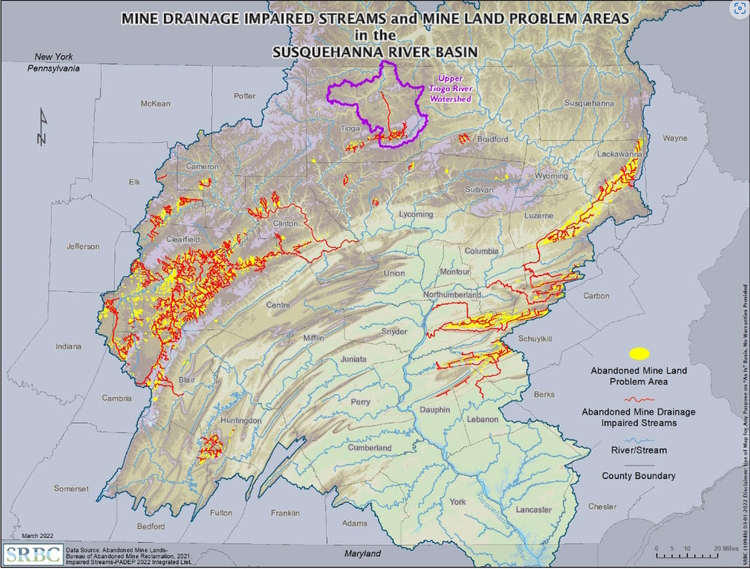
Abandoned Mine Drainage (AMD) impacts both branches of the Susquehanna River along their entire lengths. The Main Bituminous Coalfields (soft coal) drain polluted water to the west branch, and the Anthracite Coalfields (hard coal) drain polluted water to the eastern portion of the river basin. In Pennsylvania, AMD is the second highest cause of water pollution, behind only agricultural runoff. Only 30% of streams in the Susquehanna basin demonstrate the natural hydrological and ecological qualities of a healthy stream. Many outside of this 30% have been declared “biologically dead” as they support no aquatic life due to the level of pollution in the water.
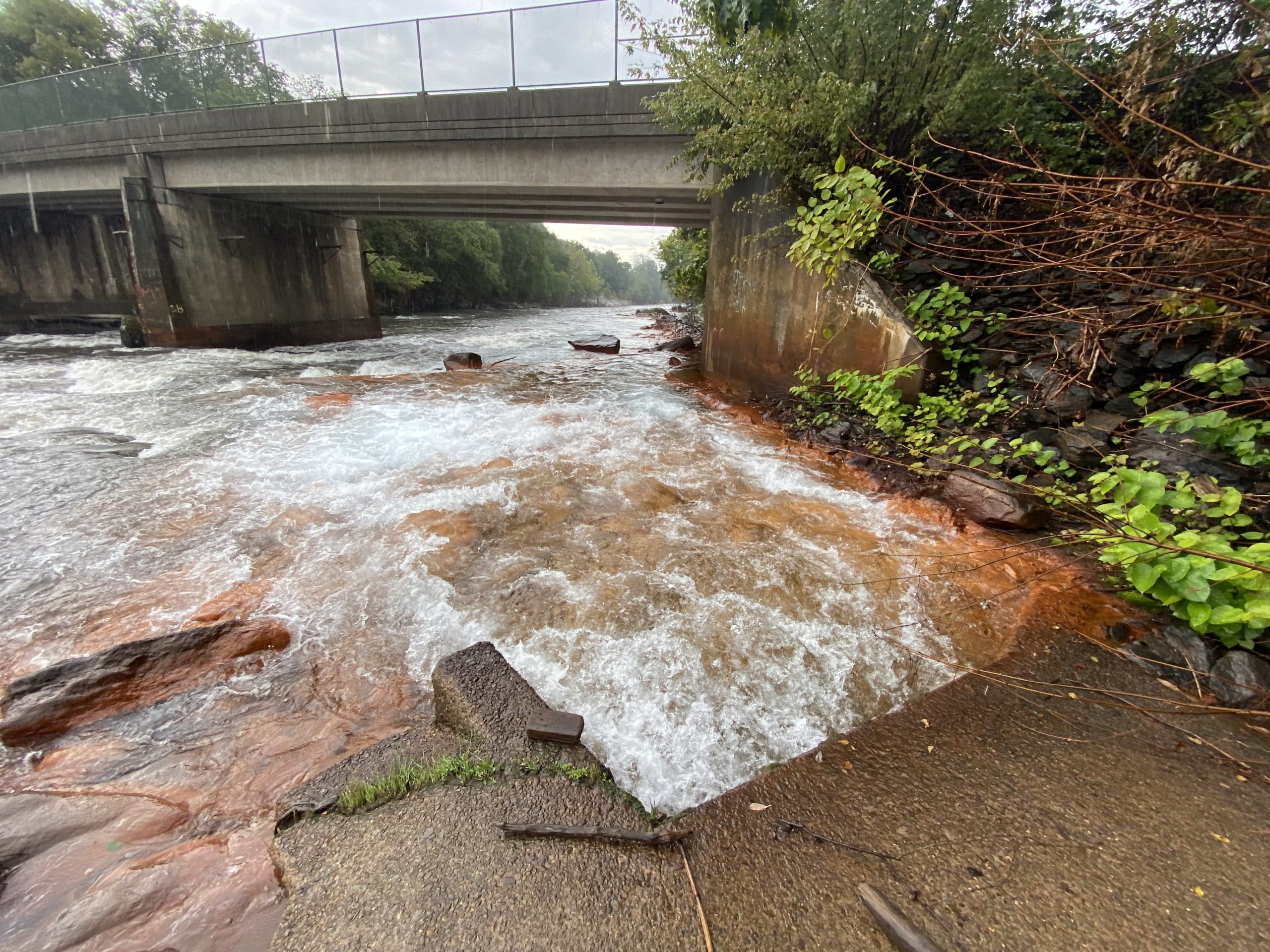
Old Forge Borehole AMD picture as it flows into the Lackawanna River.
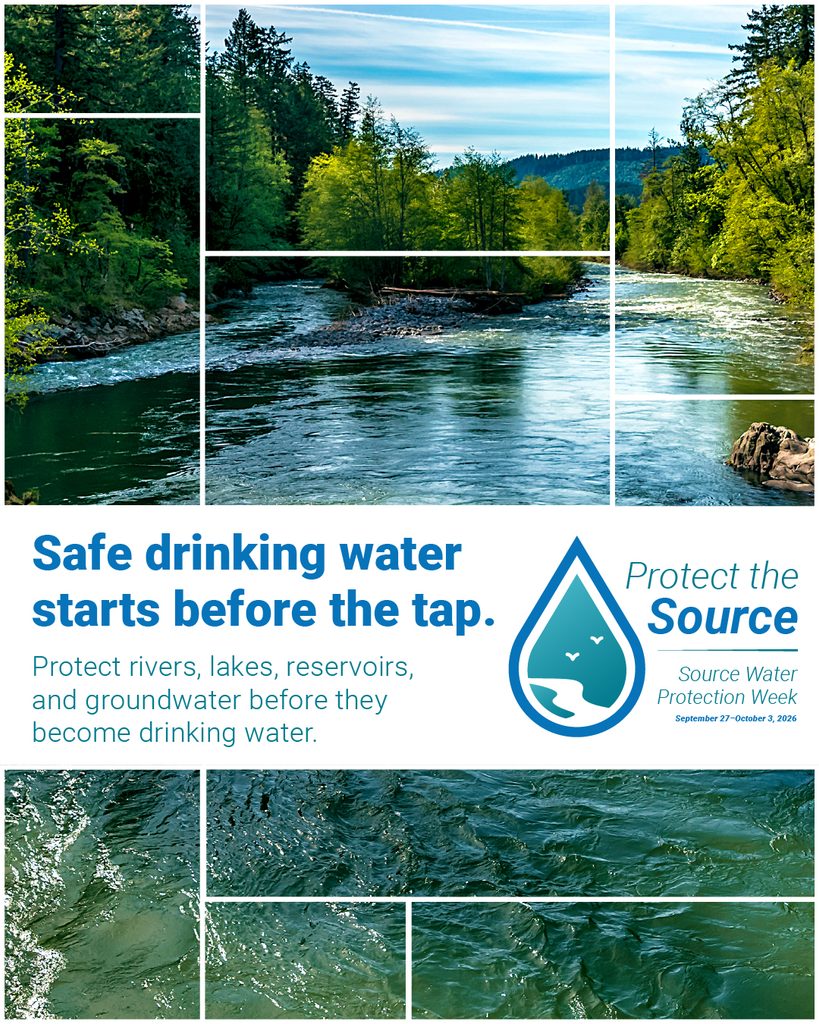
Aquatic organisms are only the “canary in the coal mine” in this situation. In addition to impacting alkalinity, which on either extreme of the spectrum will harm aquatic life, AMD releases sediments, dissolved metals, and unfriendly gasses. Released gasses, like CO2 and methane, attract mosquitoes which can cause further harm to organisms in the nearby environment. Sediments and dissolved metals such as aluminum clog the gills of organisms living in the polluted waters and can eventually drive these organisms out of the ecosystem. Downstream effects include the leaching of these dissolved metals (think lead, manganese, iron) into groundwater supplies, which are used for municipal drinking water. American Water Works Association raises awareness of impaired groundwater with Source Water Protection Week. This year, it begins on World Rivers Day!
Treatment of Abandoned Mine Lands takes years, millions of dollars, and continued maintenance efforts. Simply “waiting it out”, i.e. waiting for the underground pollutants to deplete, would likely take hundreds of years. Treatment of AMD runoff involves raising or lowering the pH (alkalinity) of the water and removing heavy metals to allow the waterway to return to a state that can again support aquatic life and natural biological processes.
Read about the professional services and technical assistance that EPCAMR provides across PA and our region impacted by AMD and abandoned mine lands in our EPCAMR presentation folder. You can also find out more about our work in our latest EPCAMR brochure 2026.
Learn more about AMD Treatment Systems here, or visit the “Fact Sheets” section of epcamr.org!






You must be logged in to post a comment.