



After finishing her summer internship with EPCAMR, which was generously funded by the Earth Conservancy, Carolyn was eager to return for yet another semester with EPCAMR as a Community-Based Federal Work-Study intern. However, before introducing Carolyn’s current projects, let’s review the outcome of her summer internship.
As per the guidelines for having an academic internship at King’s College, student interns must come up with objectives to reach by the end of their internship. The goals that Carolyn set for herself were as follows:
- Perform 10 North Atlantic Aquatic Connectivity Collaborative (NAACC) culvert assessments to determine ease of fish passage through aquatic infrastructure
- Use a flow meter or a bucket to determine flow rate at 10 sites affected by abandoned mine drainage (AMD)
- Use a YSI meter for water quality and perform a field titration for pH at 10 sites affected by AMD
- Use a photometer to determine the turbidity and concentrations of calcium carbonate (alkalinity), aluminum, iron, nitrate, phosphate, and sulfate in samples of water from 3 sites affected by AMD
- Collect 10 different species of macroinvertebrate specimens for educational use
- Foster community involvement and education through overseeing 5 volunteer opportunities, educational events, or workshops hosted by EPCAMR
Generally speaking, these objectives aimed to help Carolyn familiarize herself with the tools and tests done during monthly AMD sampling, help her work towards getting certified as a NAACC Lead Observer for field culvert assessments, and be able to better promote and represent EPCAMR at community events.
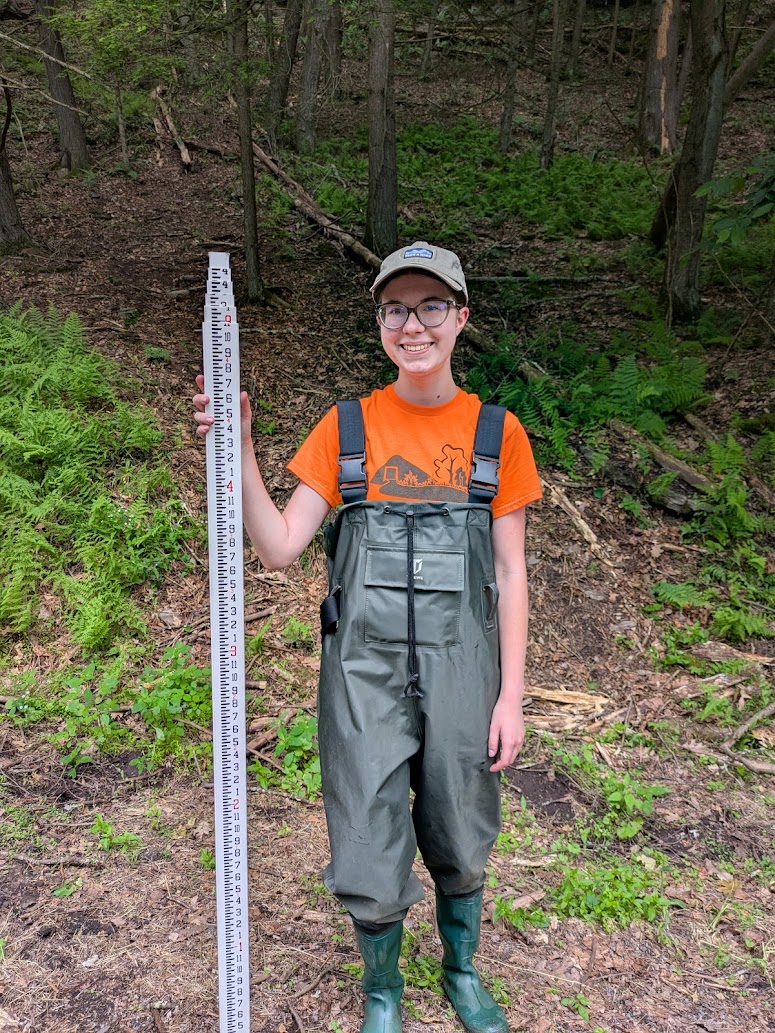
Carolyn posing in her waders while holding a stadia rod on her first day of culvert assessments this past summer.
By the end of her internship, Carolyn had successfully completed and even exceeded some of these objectives. Her most notable achievements were that she helped facilitate 9 events rather than only 5, and completed 15 culvert assessments rather than just 10, which brings her close to the 20 assessments needed to become certified as a NAACC Lead Observer.
For the final project of her internship, Carolyn took Dr. Brian Mangan’s Water Quality Analysis class of King’s College students out in the field to show them some of the culverts she helped assess. She demonstrated to the students how routine maintenance of culverts is essential, using the example of one set of culverts which were so obstructed by tree branches that they trapped more water than they transported.
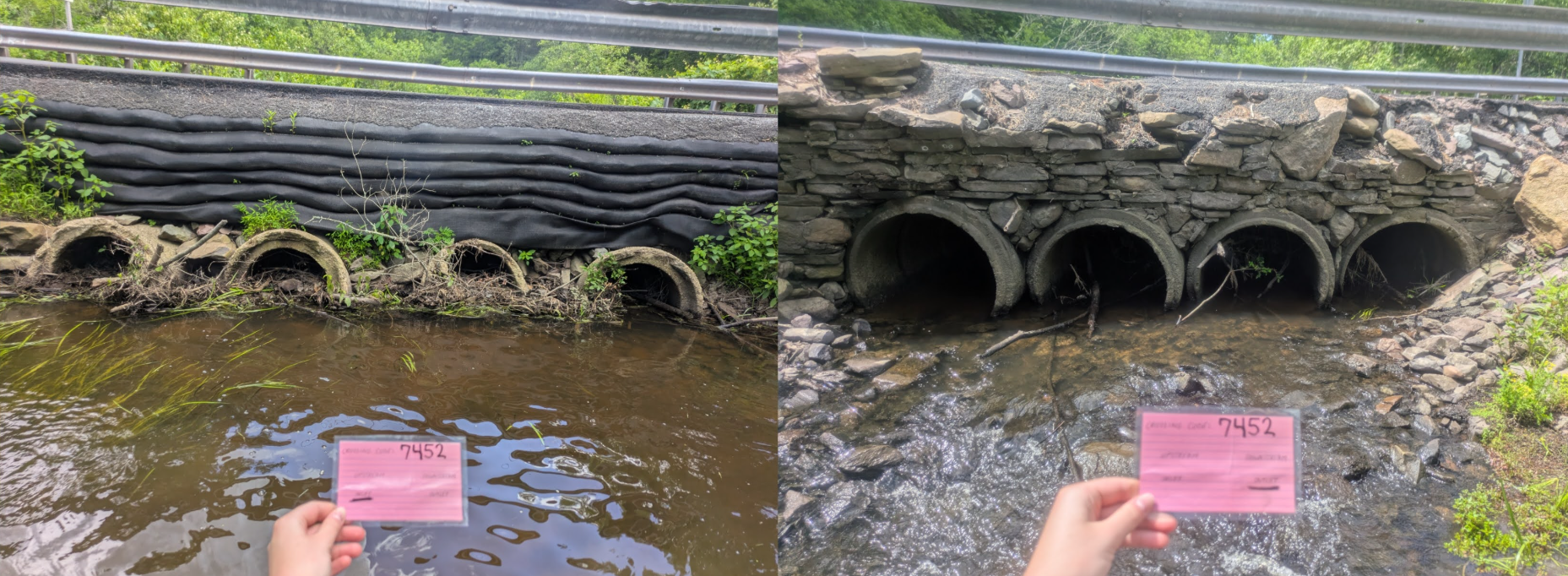
The inlet (left) and outlet (right) of the set of culverts that Carolyn showed to the students. Note the extreme difference in the height of the water in the two photos and woody debris blockage at the inlet culverts along Shickshinny Valley Road on Little Shickshinny Creek.
Carolyn expressed her thoughts on returning to work with EPCAMR, saying “I’m glad to be back. I’ve ‘returned’ to EPCAMR a few times now, but I know I’ll keep coming back to do my federal work-study with EPCAMR in future semesters. This organization is essential to the community and I’m glad to be a part of it. I can’t wait to see where this organization will take me and how much more I can learn from the team at EPCAMR.”
Recently, Carolyn joined EPCAMR in the collection of AMD samples from several sites, some sites near EPCAMR’s office in northeastern Pennsylvania and other sites in southeastern Pennsylvania. She then went with EPCAMR to deliver the samples to a partner from the University of Pennsylvania campus in Philadelphia, who will test the AMD samples to determine their content of rare earth elements. The outcome of research on rare earth elements in AMD may be revolutionary for the abandoned mine land reclamation industry, having the potential to drive greater efforts for treating AMD while extracting rare earth elements.
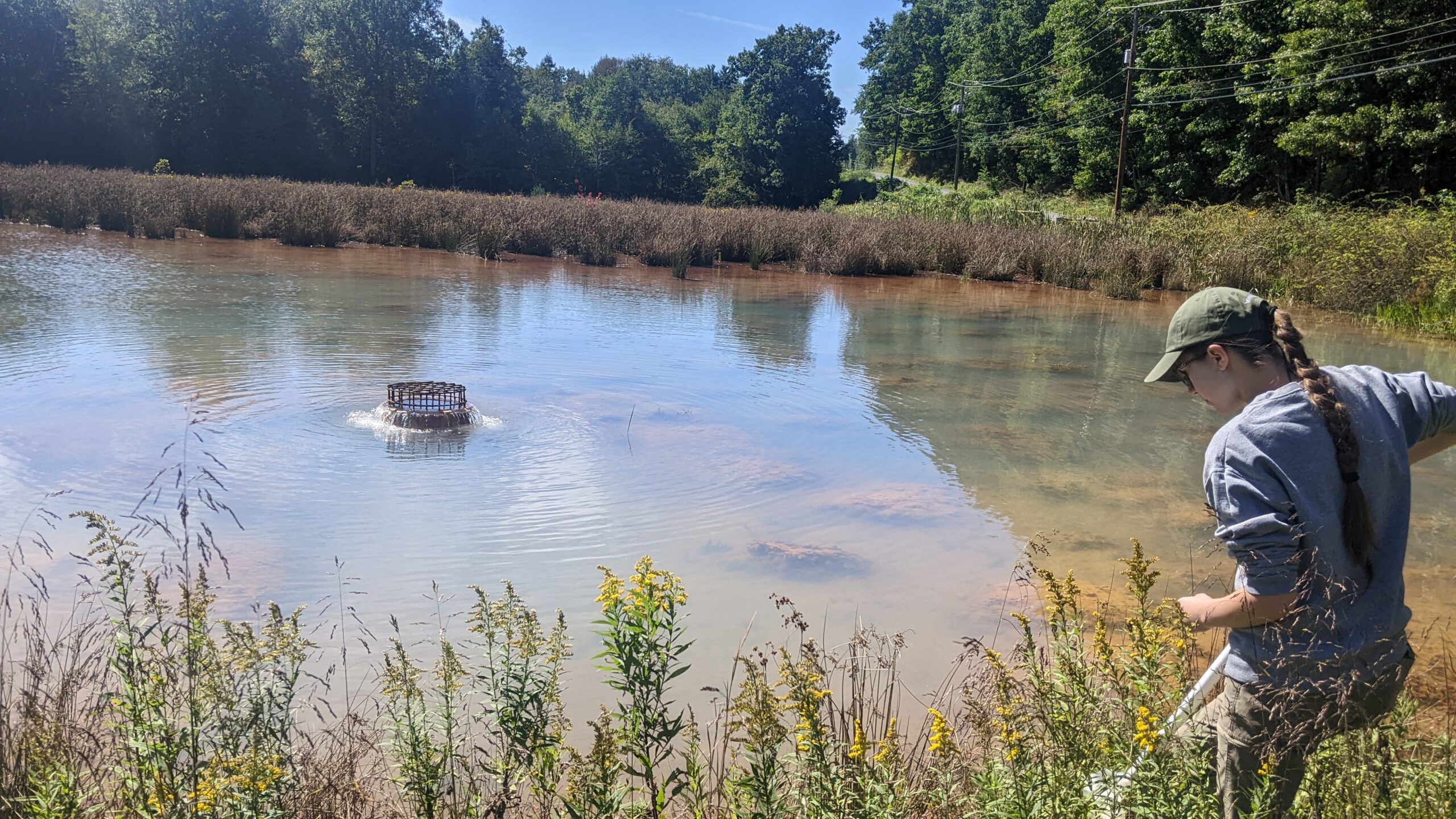
Carolyn sampling AMD from the Mary D discharge treatment system that flows into the Schuylkill River to deliver to the University of Pennsylvania for rare earth elements analysis.
In the coming months, Carolyn will be working on several different projects, such as a draft of the Coldwater Heritage Plan for Shickshinny Creek, which is Carolyn’s hometown watershed. Carolyn also continues to be highly involved in EPCAMR’s routine AMD sampling at sites in the Nanticoke and Loyalsock Creek watersheds. She hopes to complete her final 5 culvert assessments to become certified as a NAACC Lead Observer this Fall and expects to participate in a few illegal dump site cleanups of tires and trash.
Bobby stated, “It’s great to have Carolyn back with us again this Fall. She has seen the value of obtaining an internship early and often and as a returning intern, she keeps building on to her skill sets, adding additional training under her belt, gets to explore new watersheds, and be a major part of our small team here that has fun at work and gets to learn about even more watershed efforts of EPCAMR and our community partners. She loves nature, bugs, moths, butterflies, and critters of the creek. How could I not bring her back? She’s really smart, soft-spoken, listens to my storytelling adventures and random rambling on our field investigations calling out tree species, wildflower species, birds, frogs, and describing numerous AMD treatment system types from around the region. She has great ambition, shows tremendous initiative, and helps us out anyway that she can and is asked to by members of the Staff. I’m sure her parents are very proud of her. She’s getting a very immersive experience and the Community Based Work Study Program allows her to participate in the internship with the guidance and mentorship of Kelly Gibbons, at King’s College.”





You must be logged in to post a comment.