



Carolyn M. Phillips, a native of Luzerne County and Freshman in Environmental Science at King’s College, Wilkes-Barre, has started her participation in a Federal Community-based Work Study (CBWS) internship program with EPCAMR as our Watershed Outreach Grant Research Specialist over the Winter leading into Spring 2026.
CBWS allows eligible College and University students to use their Federal Work Study award to work off campus, at a local non-profit. Students earn their wages while supporting meaningful community work and gaining real world experiences and assisting non-profits with their impacts withing the communities that they serve by providing some additional organizational capacity to the organizations.
CBWS is designed for students who want their work to matter by contributing locally to the communities that surround their Colleges and Universities. They can gain hands‑on experience in real nonprofit settings, build skills that translate directly to future careers, explore fields like education, social services, history, environmental work, and community outreach. On top of the soft skills and opportunities for applied science, they can also earn certificates that they can add to their resumes and make a positive impact while getting paid. EPCAMR encourages students can contact their Financial Aid or Community Engagement office to learn more about eligibility and placements. Students at King’s College should inquire if they have questions or need more assistance on the process, by stopping by Kelly Gibbons’ office at the Shoval Center or book an appointment with her (in person is preferable) Book time to meet with me
She has a passion for science, art, and nature, and especially enjoys engaging in her many creative hobbies and spending time outdoors. She will be graduating from King’s College with a Bachelor of Environmental Science in Spring of 2029.
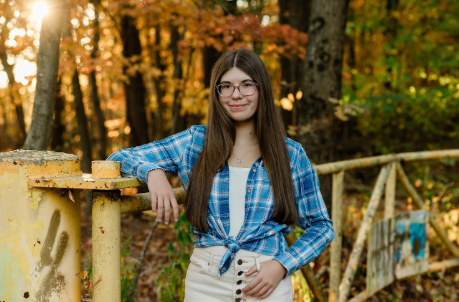
Carolyn Phillips is EPCAMR’s latest Community Based Work Study student intern from King’s College, Wilkes-Barre, PA.
Carolyn’s interest in science began early in her life, but she had no way to pursue it until she first participated in the Pennsylvania Junior Academy of Science (PJAS) competition in seventh grade. The process of designing a scientific experiment and then presenting her findings to a panel of judges was the perfect outlet for her ideas, and she fell in love with the competition, continuing to participate every year up to her senior year of high school. Her hard work and dedication to the program earned her a first award at the regional level all six years of her participation, three of the years having a perfect score, and five first awards at the state level. In her final year of participation, she was also awarded the Senior Excellence Award in Botany, which is presented to the participant with the highest score in the category, as well as a six-year Perseverance Award and a King’s College Scholarship. This year, she became a judge at the regional level of the competition and hopes to continue her involvement with PJAS so that young students’ interests in science may be nurtured and expanded upon, just as she experienced when she was younger.
Carolyn has lived in Shickshinny, PA for her whole life, and has seen firsthand the scars that the anthracite mining operations have left on the landscape. She recalls frequently seeing the blocked-off coal mine entrances with mine drainage flowing from them, the foundations of old mine offices, the massive culm banks, and sites of major land subsidence while hiking in the local mountains on State Game Lands 260.
At the young age of 10, Carolyn chose to make a diorama of the Knox Mine Disaster, which devastated the Wyoming Valley community back in 1959, for a history project in middle school. Having seen the effects of this industry, Carolyn wishes to aid EPCAMR in remediating the negative local effects of coal mining and increasing outreach to the community to get young minds interested in science.
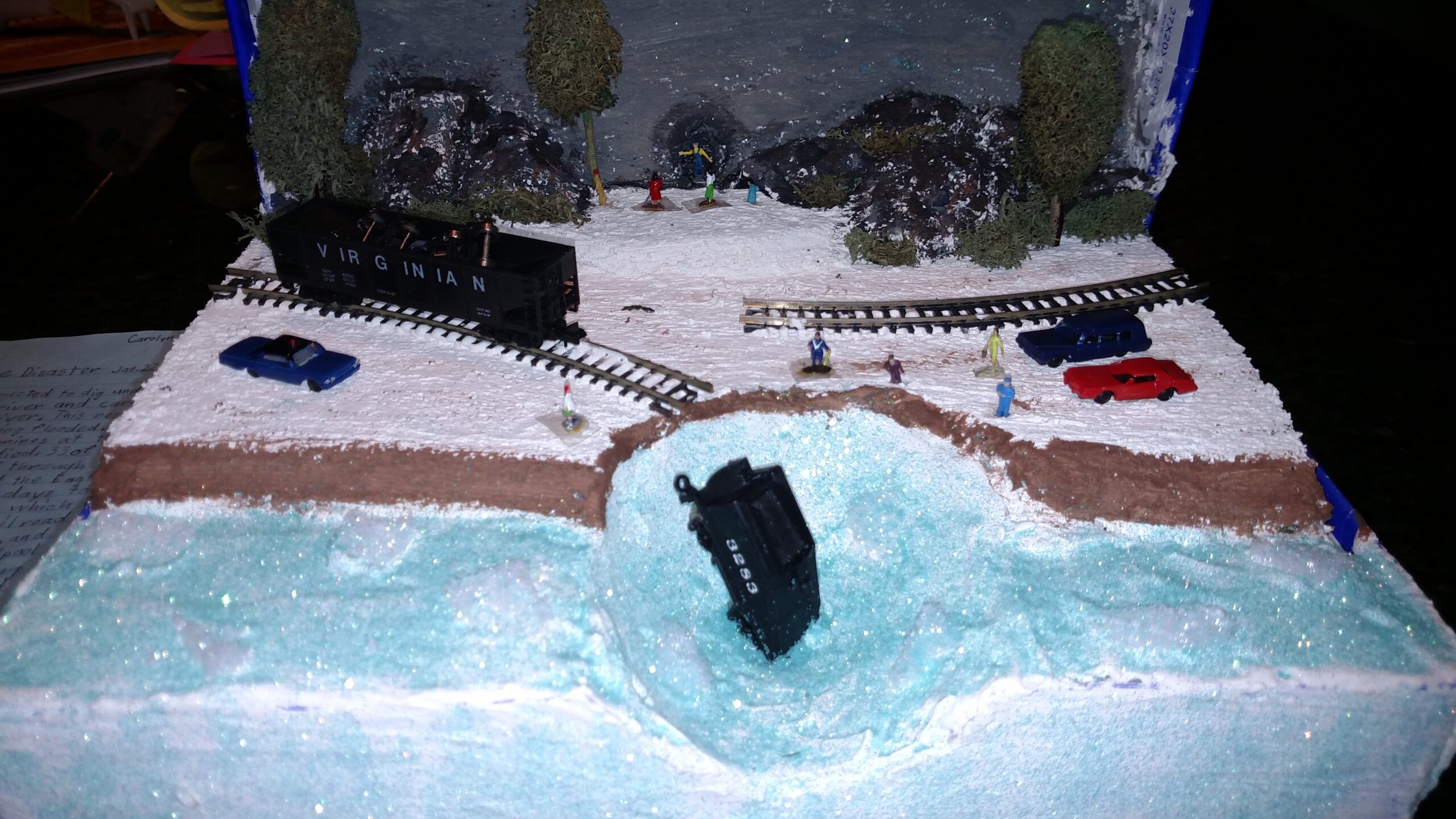
Carolyn Phillips created a diorama of the Knox Mine Disaster in 2017, little did she know she’d be working with EPCAMR that developed maps for a feature documentary on the Knox Mine Disaster years later.
Carolyn’s environmental science lectures and labs at King’s have broadened her ambitions to new horizons as she learned about the local wildlife and the environmental issues plaguing the area, many of which result from the anthracite mining industry. She was first introduced to EPCAMR through a trip for her environmental science lab with Dr. Tara Mangan, when the class visited to learn about EPCAMR’s projects and impacts on the environment, as well as educational outreach for the community. After this initial meeting, Carolyn immediately began reaching out to King’s faculty and EPCAMR staff to determine how she could get involved with EPCAMR to make a difference in the community and local environment.
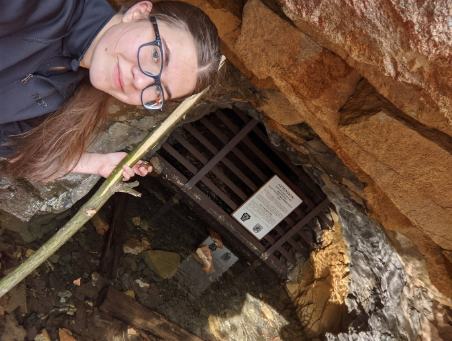
Carolyn Phillips explores one of the sealed mine entrances and bat caves along Dogtown Road on State Game Lands 260, near Shickshinny where EPCAMR is currently conducting a Coldwater Conservation Watershed Assessment in her hometown. This is one of many sites where the water was sampled for AMD impacts suspected of reaching Rocky Run. (2021)
Carolyn connected with Kelly Gibbons from the King’s College Shoval Center, which focuses on community engagement and learning, as well as volunteer opportunities, to help her begin working with EPCAMR. Kelly Gibbons worked with Carolyn, as well as Bobby Hughes, the Executive Director of EPCAMR, to arrange a Community-based Federal Work Study position with EPCAMR.
Carolyn mentioned, “I’m grateful that my classes led me to EPCAMR, and even more grateful that I’ve been able to become involved with EPCAMR so quickly. The process of getting involved was far easier than I thought. I’ve been welcomed with open arms, and I’m very excited to begin working with EPCAMR in time for their 30th Anniversary, which is such a momentous occasion for the organization. I’m also looking forward to earning my Aquatic Organism Protocol free training certification to become a NAACC lead observer to analyze road-stream crossings and learn more about my local watershed after getting 20 of them surveyed under my belt later this year in my hometown watershed.”
“I’m glad that Carolyn was so interested in seeing if she could find a way to get some hours with EPCAMR through the Federal Community Based Work Study Program at King’s. It’s a program I constantly am informing college students about how they can work directly in the community with area non-profits and get paid at the same time through the program. Since we don’t often have funds to be able to pay the students, unless they are a part of an AmeriCorps VISTA Program and are able to commit to a much longer length of time with more hours involved, this route is a viable alternative. This program allows both the students and EPCAMR to have the flexibility to see that they are getting to class, going to a part-time job oftentimes, and are spending a limited amount of hours directly in their field of interest helping to make a difference in their community outside the college campus and academic environment they are in for the time they are in college.” explained Bobby Hughes, EPCAMR Executive Director.
Besides working with EPCAMR through her Community-based Federal Work Study position, Carolyn also intends to volunteer with EPCAMR for various events, such as cleanups. After first hearing back from Bobby Hughes, Carolyn quickly filled out EPCAMR’s Volunteer Registration Form to get further involved with the organization.
Carolyn tells us, “These days, it’s so easy to get caught up in your own little world. There aren’t constant reminders of what we’ve done to the environment, only problems which often can only be seen when they’re sought out. Most people would like to ignore things that don’t affect them directly, but what they might not realize is that if we don’t do anything to remediate problems in the environment now, they can snowball into even larger problems that will still need to be fixed in the future. These issues can and will affect the futures of our children and grandchildren, affecting not only the physical world they will live in but also their quality of life.”
“I’m glad that Carolyn is from the Shickshinny area too! She may know some of the families in the area that we may need to get in touch with later in the Spring and Summer as we continue to macro surveys and bridge and culvert assessments who may live along some of the creeks and streams that we would like to just take measurements of for aquatic passage of fish and macroinvertebrates as a part of our Coldwater Conservation Planning Grant with the PA Council of Trout Unlimited for Shickshinny Creek, Paddy Run, and Rocky Run.” Bobby hopefully exclaimed. “She’s only been here for less than a day so far, and has already completed her NAACC Aquatic Organism Protocol Certificate Training, so I’m sure she’s ready to get her feet wet in her hometown waters around the Shickshinny area.” Bobby joked.
Carolyn will be coming into the EPCAMR Office twice a week on Mondays and Fridays, when she doesn’t have classes, so there is no conflict with her on campus education, and providing us with 6.5 hours a week for 8 weeks. Her activities are outlined in the following Volunteer Activity Description (VAD) entitled, EPCAMR WatershedOutreachGrantResearchSpecialist_Job Description.






You must be logged in to post a comment.