



EPCAMR would like to announce an early Christmas present to the Lackawanna River Conservation Association before the Holidays. We’ve decided to award the organization with a $1945 mini-grant from our partner, the Appalachian Region Independent Power Producers Association (ARIPPA). Organized in 1989, ARIPPA is a non-profit trade association comprised of independent electric power producers, environmental remediators, and service providers located in Pennsylvania, Virginia, and West Virginia that use coal refuse as a fuel to generate electricity. Utilizing circulating fluidized bed (CFB) boiler technology to convert both anthracite and bituminous coal refuse into electricity, ARIPPA plants also provide unique multimedia environmental benefits by combining the production of energy with the removal of coal refuse piles and reclamation of the land for productive purposes.
LRCA has initiated a collaboration with the PA Anthracite Heritage Museum (PHMC), EPCAMR and the Lackawanna Historical Society (LHS) to conduct historical research and develop information about the cessation of underground mining and pumping operations in the Lackawanna Basin of the Northern Anthracite Field in 1961, the subsequent inundation of the mine void system causing a public safety emergency, and the construction of the Old Forge Borehole to stabilize the mine pool flooding in 1962.
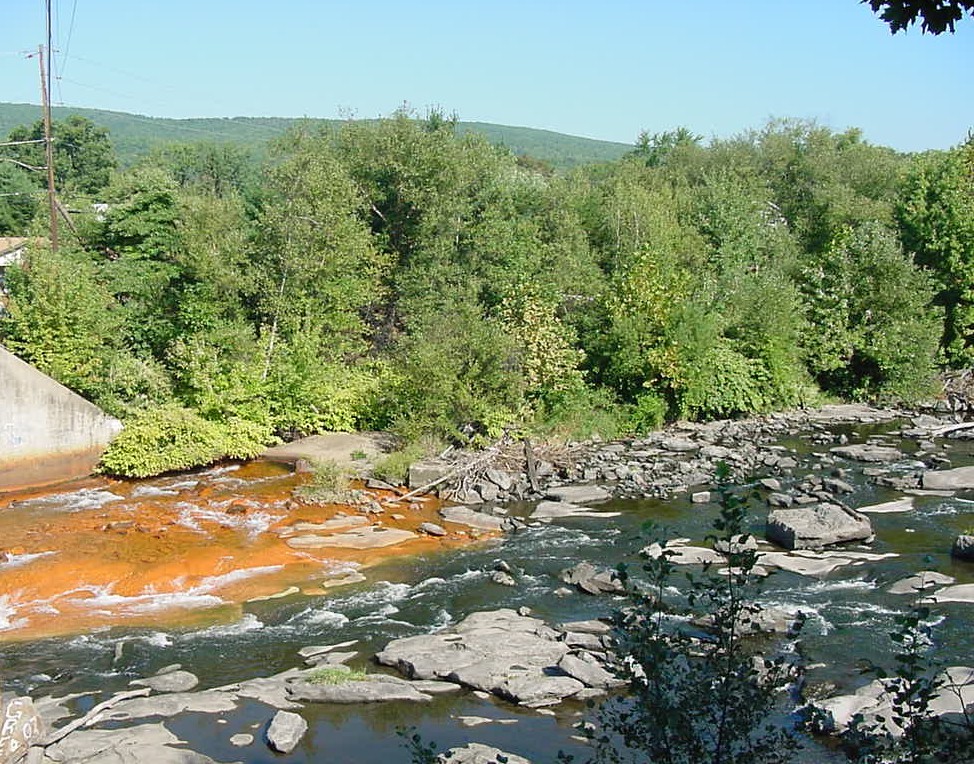
The Old Forge AMD Borehole seen looking north from the Union Street Bridge in Old Forge as it enters the Lackawanna River polluting the lower 3 miles of the watershed before entering the N. Branch of the Susquehanna River.
Tara Jones, Executive Director, stated excitedly, in her application that “We will produce a White Paper that will serve as a primary document to inform the establishment of an exhibit kiosk to be installed in the Anthracite Heritage Museum in Scranton, as well as a summary poster to be available for onsite installation at the Borehole location at the Union Street Bridge in Old Forge, PA.”
LRCA will conduct historical research in local and state archives, newspaper records, and conduct key person interviews related to the cessation of mine water pumping in the Lackawanna Basin by the Moffat Coal Company on November 1, 1961. By January 1962, this caused flooding of the mine voids under the Lackawanna Valley and the surcharge of mine waters into ground waters and surface drainage that severely damaged private properties and public infrastructure across wide-spread areas between Old Forge, Scranton, Olyphant, and Carbondale.
The various agencies of the Commonwealth of Pennsylvania and Federal Government responded to design and construct a pressure relief borehole on the west bank of the Lackawanna River at the crest of the Moosic Saddle Anticline in Old Forge between May and September 1962. Since then, the Old Forge Borehole has been discharging polluting mine waters at an average of 60 million gallons per day into the Lackawanna River. Over 5,000 pounds of iron, manganese, sulfur, aluminum, and other trace elements precipitate out of this drainage. It may be the largest point source of mine drainage in North America.
Bobby Hughes, EPCAMR Executive Director, emphasized with great pride, “There is no better mentor of mine, then our former Past President of EPCAMR, and co-founder of LRCA 32 years ago, Old Man River himself, and LRCA Senior Project Manager, Bernie McGurl to act as the Principal Investigator to conduct the research and draft the White Paper. Bernie and I have told thousands of students and visitors to the Old Forge AMD Borehole this story of its inception and legacy through our oral history and knowledge gained from just reading and researching about our fascinating Anthracite Mining heritage and history. It’s time we take that institutional knowledge and transferred it in a way that will captivate audiences young and old at the PA Anthracite Heritage Museum, where there are numerous opportunities for students and visitors alike to learn about our rich history in mining and how we are dealing with the legacy looking to the future. It starts with education.”
The paper will serve as the first phase of several intended outcomes: the development and interpretive exhibit on the end of underground mining in the Northern Field at the Anthracite Heritage Museum; the development of an educational information poster for students and the public; the Installation of a Pennsylvania Historic Marker at the Borehole site and the retrieval, and preservation of the 42-inch diameter stone core plug from the borehole drilling work that lies on the cobble bar in the riverbed adjacent to the borehole.
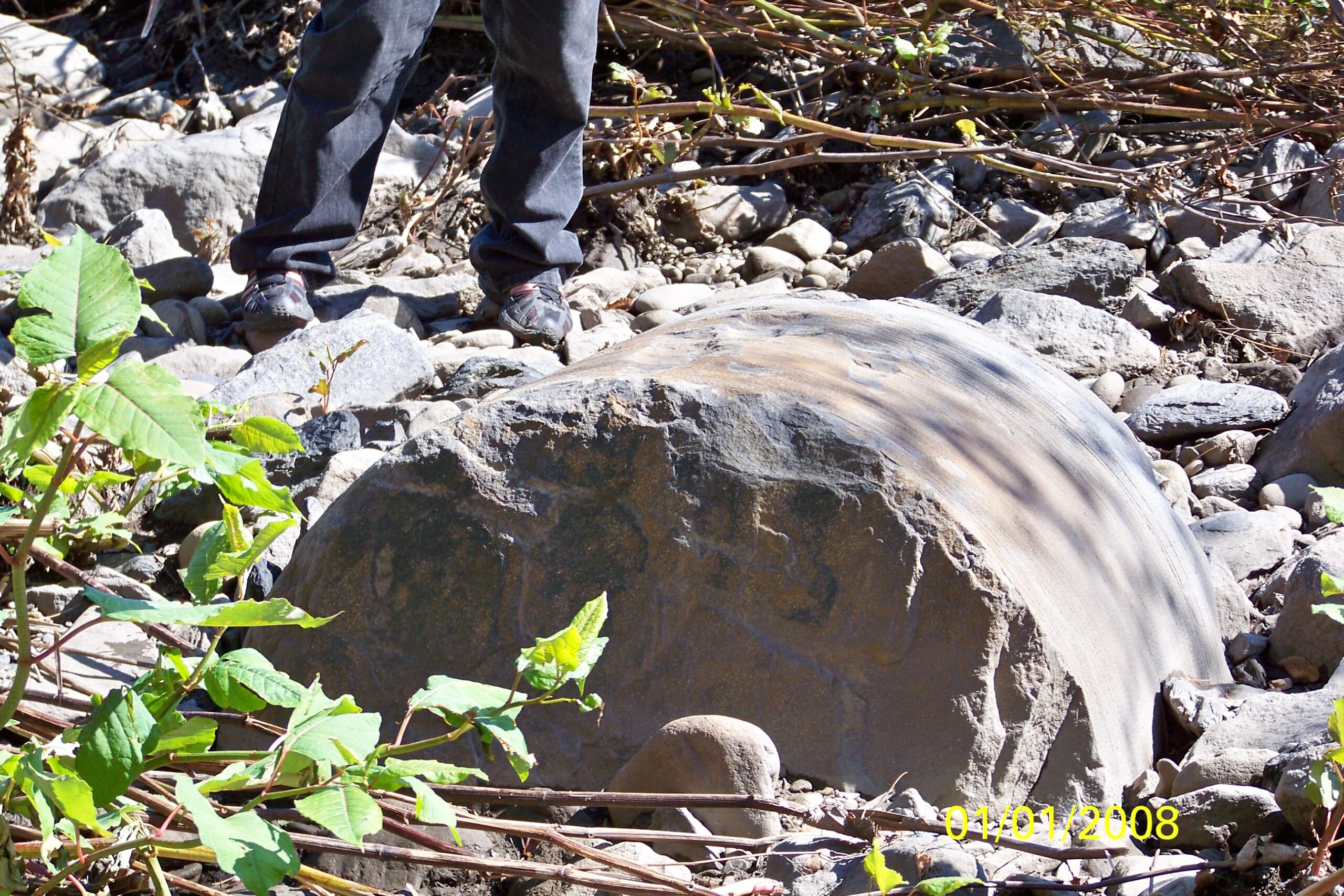
The sandstone core plug from the Old Forge Borehole currently sits along the western bank of the Lackawanna River adjacent to the box culvert that carries the AMD to the outlet just above the Union Street Bridge. It’s several thousand pounds and LRCA and EPCAMR are going to be looking for a solution on how to get it out of the River and up along the bank to be placed near a future planned Historic Marker at the site.
Check out a 2012 presentation put together by EPCAMR, LCRA, and the SRBC on the Lower Lackawanna River Watershed Assessment Plan. It gives you some insight into the historic conditions of of the water quality and flows below the Old Forge Borehole and it also gives you an idea of the extent of the underground mien pools that feed the voluminous discharge that Bernie often calls “the single largest source of AMD pollution in terms of iron loading and flow to the Chesapeake Bay watershed.







You must be logged in to post a comment.